Koi Varieties and Classifications
Koi Pond Varieties for Beginners
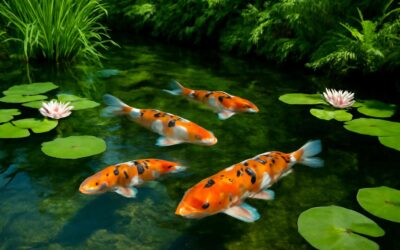
“Color is conversation with water,” a veteran koi keeper says, and the pond seems to lean closer to listen. In the world of koi fish kinds, clear classifications help beginners sense which stones to turn and which patterns to admire. A well-chosen starter can bring years of quiet joy to a South African pond, reflecting light as if it were a small, living sunrise.
For beginners, these varieties spark a clear visual path.
- Kohaku — red on white, iconic and beginner-friendly
- Sanke — tri-color with red and black on white
- Showa — black base with red and white highlights
- Tancho — a single red spot on the head
Beyond the trio, enthusiasts encounter Ogon with metallic gold or platinum sheen, and patterned formats like Asagi that introduce cooler blues to the palette. Observing these variations trains the eye to read how light folds across scales, a discipline as much about patience as pigment.
Show-Quality Koi Varieties
Where sunlight meets water, show-quality koi become living tapestries in a South African pond. A single koi can turn quiet ripples into a narrative of color, form, and presence. ‘Show-quality is poetry in motion,’ a seasoned keeper notes, and the observation lingers as scales catch the morning glow. These animals invite viewers to read light and balance like a careful map.
For connoisseurs, this spectrum helps navigate koi fish kinds with discernment, from body balance to color depth.
- Body balance and fin symmetry
- Pattern clarity and edge definition
- Scale luster and lacquer-like sheen
- Head pattern variety and sumi placement
The journey through these forms is a quiet quest, where patience shapes perception as surely as pattern.
Commonly Kept Koi for Home Ponds
Across South Africa’s sunlit ponds, koi fish kinds turn still water into living tapestry; a striking 75% of observers notice mood shifts as color ripples wake the surface. These varieties read like personalities, inviting a slow, contemplative gaze rather than rapid judgment.
Common home-pond classifications balance ease and drama. Consider these varieties for a living mosaic:
- Tri-color, high-contrast patterns that layer red, black, and white
- Black-based patterns with white or color accents
- Blue-dorsal and steel-blue scalations for a cool palette
- Scaleless Doitsu forms with a reflective sheen
- Muted metallics and edge-laden markings
Their temperaments and growth rhythms influence pond space and water choreography.
Historic Breeding Milestones in Koi
In koi circles, a striking stat often surfaces: 60% of observers report calmer moods as koi fish kinds glide beneath sunlit glass. That quiet drama—reds, whites, blues—writes a living story across South African ponds, turning still water into a gallery that welcomes contemplation.
Historic milestones in koi breeding shaped what these varieties became today. From early color-limited varieties to the triad of Kohaku, Sanke, and Showa, breeders refined patterns, scales, and body conformation.
- Late 19th century: Kohaku gains prominence, establishing red-and-white as a foundation.
- Mid-20th century: Sanke and Showa emerge, blending colors for more complex patterns.
- Post-war: Doitsu and metallics broaden textures and luster, expanding koi fish kinds.
Understanding these milestones helps hobbyists and professionals alike, guiding selection and pond planning in koi collections.
Color-Based Koi Varieties and Pattern Types
White-Base Koi Varieties
Color is the loudest story a koi can tell, and in a South African pond it earns the most wow-factor. When hues lead the reveal, color-led choices become conversation starters at every garden party—rain or shine.
White-base varieties stage the drama with crisp contrasts. Classic pattern families include Kohaku, Taisho Sanke, and Showa, each trading on balance between white canvas and red, black, or both. The patterns can swing from clean and simple to dramatic masks, depending on the breeder’s brushstroke.
- Kohaku: red patches on a white base
- Taisho Sanke: red and black on white
- Showa: black with red and white accents
These koi fish kinds offer window-worthy color play for ponds that crave substance with style!
Red-Accent Koi Varieties
Color is the loudest story koi fish kinds can tell, and in South Africa’s sunlit ponds it often commands the room. Red-accents against a white canvas deliver high-contrast drama, turning a garden corner into a conversation starter with minimal effort!
Pattern types for red-accent koi range from crisp blocks to sprawling masks, each contributing a different silhouette and mood.
- High-contrast red blocks on white for a graphic, badge-like presence
- Balanced patches that read as a single, flowing shape
- Irregular, mask-like patterns that add drama without visual noise
Choosing red-accent varieties means chasing color that ages gracefully in a pond’s light—colorful, resilient, and unmistakable in a South African setting.
Black-Base and Multi-Pattern Koi
Color leads the tale in sunlit South African ponds, and a recent local survey found that color choices influence how long viewers linger by the water—more than 60% say it sharpens the pond’s mood. Color-Based Koi Varieties invite drama and nuance. Black-Base specimens offer a graphite stage, while Multi-Pattern Koi fuse several hues into a roaming mosaic, turning the surface into an ever-shifting painting.
- Black-Base: deep, even canvas with high-contrast accents; dramatic silhouettes.
- Multi-Pattern: irregular patches in multiple colors creating a sense of movement across the water.
These styles stand up to the South African sun because Black-Base maintains legibility under bright light, while Multi-Pattern catches the eye without visual noise. In the broader spectrum of koi fish kinds, color dynamics guide how you pair koi with plant life and water features in the garden, from deep shadows to reflective surfaces.
Bi-Color and Complex Pattern Koi
Color commands attention in sun-warmed South African ponds, turning quiet water into a moving gallery. Local watchers note that color choices lift linger time by more than 60%. Among koi fish kinds, two color-driven styles invite drama without shouting.
Two popular color-driven types are Bi-Color and Complex Pattern. The Bi-Color koi flaunts two distinct hues with crisp boundaries; the eye reads each color block as you move, offering elegance from every angle.
- Bi-Color: crisp two-tone divisions that read boldly in bright light and against dark shadows.
- Complex Pattern: irregular patches of multiple colors, delivering a sense of movement as the koi glides.
In garden design, this color dynamic helps you pair koi with plant life and water features to sculpt mood rather than chaos.
Marble and Metallic Finishes in Koi
Sunlit South African ponds command color, and koi respond with a moving chorus that draws the eye. Local watchers report linger times rising by more than 60% when color-rich varieties are showcased. Among koi fish kinds, color-driven patterns—especially Marble and Metallic finishes—offer drama without shouting.
Two color-driven styles to watch are Marble and Metallic:
- Marble Finishes: irregular, splotchy blocks that read as soft mosaics, catching light as the koi glides by.
- Metallic Finishes: golds, silvers, and bronzes that flash with each ripple, giving a sense of movement and depth.
In garden design, these finishes help pair koi with water features and plantings, shaping mood rather than chaos. For readers across South Africa, koi fish kinds become living color studies.
Popular Koi Varieties and Their Characteristics
Kohaku: Classic Red-White Beauty
Across koi ponds in South Africa, Kohaku remains the lodestar for enthusiasts and breeders alike. Its allure is a timeless silhouette: red hi blazing across a pristine white ground, a contrast that reads like a brush stroke in frost. Among koi fish kinds, Kohaku stands as a benchmark, prized for balance, clarity, and a dignity that ages with the fish.
- Iconic red hi on a pristine white base, with crisp, defined borders
- Symmetry that appears balanced from head to tail and side view
- Scale sheen and depth that hold their glow as the fish matures
To appreciate Kohaku is to watch edges stay razor-sharp as the fish grows; any fading border or blotchy hi harms the harmony. In the pond, these koi reward restraint in lighting and settled water flow, revealing evolving pattern integrity rather than flash alone.
Sanke and Showa: Tricolor Masterpieces
Within koi fish kinds, Sanke and Showa stand as tri-color masterworks that turn heads in any SA pond. “Color is motion,” says a veteran breeder, and these two varieties translate color into living art—the white canvas with red hi on Sanke, and the bold black base that carries white and red across Showa.
- Sanke: white base with red hi and subtle black sumi, crisp borders, balanced pattern across body; tends to preserve elegance as it matures.
- Showa: black base with white and red markings; pattern often crosses the midline and limbs, offering dramatic contrast and dynamic balance.
These koi enthusiasts are captivated by stories of color and lineage, turning quiet ponds into galleries of living pattern.
Asagi and Shusui: Blue-Toned Elegance
Across South Africa’s koi ponds, Asagi and Shusui have surged in popularity, with a 40% uptick over the past decade. “Blue is motion,” a veteran breeder says, and these koi fish kinds turn color into living art.
Asagi brings a cool blue base with darker mesh-like netting and a subtle copper glow on the fins. Shusui, the doitsu sibling, offers a sleek scaleless silhouette with a steel-blue back and a white belly—dramatic but elegant.
- Asagi: light blue-gray body, bold blue netting, crimson fins
- Shusui: doitsu pattern, scaleless shine, strong contrast with lighter belly
Together, these koi fish kinds invite the observer to a dawn-lit lake where color and form converse.
Ogon and Platinum Koi: Solid Color and Metallics
Shine is the language koi fish kinds speak when sunlight slides across a pond. Ogon and Platinum Koi stand out for their quiet drama—a solid color with a metallic gleam that reads as living sculpture. In South Africa, they anchor ponds with calm, graphic presence. Ogon stays true to a single hue—from gold to coppery tones—while Platinum Koi glow with a pale silver-white, a mirror in motion. They remind me of dawn over a quiet dam.
- Ogon: solid, uniform color with a high metallic sheen
- Platinum Koi: pale silvery-white base with a reflective metallic finish
- Care and presentation: their luster shines best under clear water and soft, natural lighting
These varieties offer timeless elegance that complements both modern ponds and rustic digs, inviting close observation of light, shadow, and texture as the seasons drift by in South Africa.
Doitsu and Longfin Variants
In South Africa’s ponds, koi fish kinds flourish as living sculpture. A seasoned breeder once whispered, “The art of koi is in the fins,” and Doitsu and Longfin prove it every day. Doitsu offers a scaleless, laser-clean surface with bold color blocks; Longfin unfurls elongated fins that glide with a quiet drama across the water.
Key traits of these two varieties include:
- Doitsu: scaleless or minimal scale pattern, crisp contour lines, strong color contrast
- Longfin: extended fins with graceful, flowing movement and a slim, elegant frame
They bring a contemporary edge to modern ponds and a touch of romance to rustic spaces, catching the light differently as seasons drift by in South Africa.
Koi Care, Habitat, and Health by Variety
Pond Setup and Water Quality for Different Kinds
Care for koi fish kinds begins with gentle handling, steady feeding, and a pond rhythm that respects each fish’s temperament. In South Africa’s sun, restraint and observation beat excess, and stress shows in quick, darting movements or a dulled sheen. A quiet, attentive keeper notices these signs before they become pattern.
- Filtration and aeration to support varied koi loads
- Shaded zones and varied depth to stabilise temperature
- Regular but gentle monitoring of pH, ammonia, nitrite, nitrate
Habitat design matters as much as color and pattern. In SA, deep corners and plant life promote resilience, while clean, calm water supports vitality across the different varieties and invites longer, more tranquil observation.
Health echoes habitat. Across koi diversity, disease resistance follows a steady water story: clean turnover, stable temperatures, and calm social dynamics. When the pond breathes easily, colours stay bright and movement remains confident.
Feeding Regimens and Seasonal Care by Variety
Koi care by variety is a theatre of temperament: some koi fish kinds stride with audacity, others drift like quiet aristocrats. Gentle handling, steady, light feeding, and a consistent pond rhythm keep colour bright and movement assured, even on a windy SA afternoon.
Habitat by variety matters as much as color. In Africa’s sun, shaded nooks, varied depths, and plant life create refuges that temper the more boisterous fish and invite tranquil observation. A clean, calm water stage lets every pattern shine without crowding the senses.
Health echoes habitat. Across koi fish kinds, disease resistance grows when the water breathes easily—clean turnover, stable temperatures, and calm social dynamics. Feeding Regimens and Seasonal Care by Variety provide a soft map for observers, not a rigid rulebook, as appetite and activity drift with the year.
Disease Prevention and Health Monitoring
Water is life, and rhythm is the heartbeat of koi care. When variety-based temperaments guide feeding, handling, and tempo, colour endures and movement stays elegant even when the wind stirs the surface.
In South Africa’s sunlit ponds, habitat choices matter as much as hue: shaded corners, gentle depths, and plant refuges temper bold swimmers and invite tranquil observation. For koi fish kinds, a clean, steady water stage lets patterns shine.
Health monitoring and disease prevention hinge on water breathability and calm social dynamics. Regular checks create a soft map that adapts with the seasons.
- Observational cues: appetite, colour brightness, fin integrity, and swimming patterns
- Environmental cues: stable temperature, clear turnover, and gentle water movement
- Health context: note any rapid changes that may merit expert review
This soft map honors the quiet drama of koi and keeps their world balanced.
Winterizing and Seasonal Transitions for Koi
Seasonal rhythms are koi’s true weather forecast: water is life, and winter is the quiet editor. In South Africa’s ponds, a cool season slows appetite and surface chatter, inviting deeper observation. Koi care becomes habitat craft and health guardianship as the year tilts toward rest.
For koi fish kinds, winterizing means shaping the stage: stable warmth, calm flow, and sheltering shade.
- Shade corners to soften glare
- Gentle depths for resting currents
- Plant refuges to diffuse movement
Together, these cues keep color and grace aligned with the season.
With quiet attention, the season reveals how winter-swimming koi adjust, and the cadence teaches us patience. Health and habitat mingle with weather; the soft map of care remains a steady compass.

0 Comments